Posts

Analogue 12: Embodied Light & the Resurrection Body

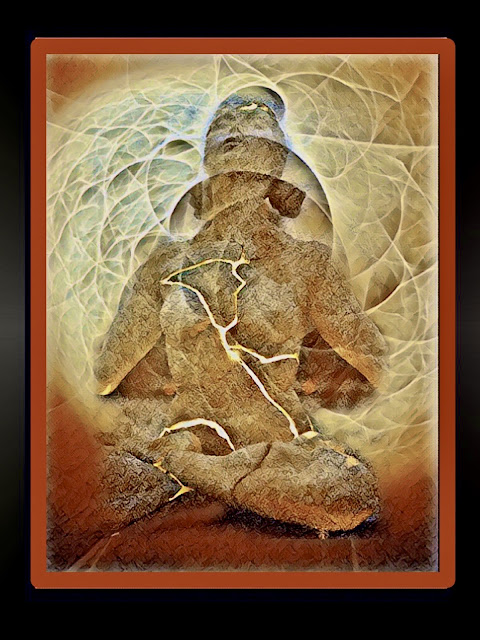
 Analogue 12 There are those who are afraid of being resurrected stripped bare. Their desire, therefore, is to be raised in a material body, not realizing that someone clothed in flesh is actually naked. Those who have become beings of light, however, have put off the flesh and yet they are not bare. It has been said, “flesh and blood cannot inherit God’s kingdom.” So what is it that cannot inherit that realm and what is it that can? What inherits the Kingdom is that which is in communion with Yeshua’s blood— for it is he who said, “Whoever does not eat my flesh and drink my blood does not possess life.” So what is this flesh? It is Logos. And what is this blood? It is the sacred Spirit. Whoever receives these has both food and drink, and is fully clothed. However, I must oppose those who deny that neither form or flesh shall rise from the dead, for both positions are in error—those who say the material form shall rise and those who say no form will ever rise. Here is what I affirm...

Analogue 11 Images

Image
 

Analogue 11: The Hidden Treasure

Image
Analogue 11 No one hides a thing of great value in something that will attract attention, but folk will often put objects of worth into a container that is worth little or nothing. Likewise, the soul—a precious thing—has come to exist in a humble body.  SYNOPSIS  This may be one of Yeshua's wisdom sayings hitherto unknown but perhaps alluded to and included in the Paul’s Epistle (II Corinthians 4:7), and also found in the Gospel of Thomas 29, 109. The esoteric reality and the exoteric manifestation. This is an esoteric teaching concerning the existence of the soul and its ultimate value which may indicate a new discovery or revelation being made concerning in the inner nature of humankind. The treasury of the soul, or soul treasure, which is both treasure in the soul, and the soul as treasure.  Treasure hidden in clay vessels as a metaphor for how the divine has concealed the inner value of something and confused the outer mind. In light of the discussion in analogue 10, ...

Analogue 10 Images

Image
 

Analogue 10: The Spiritual Ontology of the Messiah

 ANALOGUE 10 The name “Yeshua” is the private name, and “the Christ” is the public or revealed name. “Yeshua” does not occur in other languages, but “the Christ” is “Messiah” in Aramaic, “Christos” in Greek, and it is equivalent for “The Anointed One” in the languages of different peoples. He who has been revealed as the one consecrated to God, however, is the real secret, and as the Anointed One, he contains everything within his heart: the human, the archetype, the mystery, and the Father. Some say that first the Master died and then was raised, but they are confused. First he was resurrected, and then he died. Those who are resurrected first are like God; they are already alive and can never die. Video Introduction to Analogue 10 SYNOPSIS Analogue 10 appears to be part of a longer discourse that begins here and ends with Analogue 13 (or perhaps extends through Analogue 17). Here Philip returns to the concept of the overarching divine power to assist humanity which was introduced...

Analogue 9 Images

Image
 

Analogue 9: The Feminine Spirit & Yeshua's Parentage

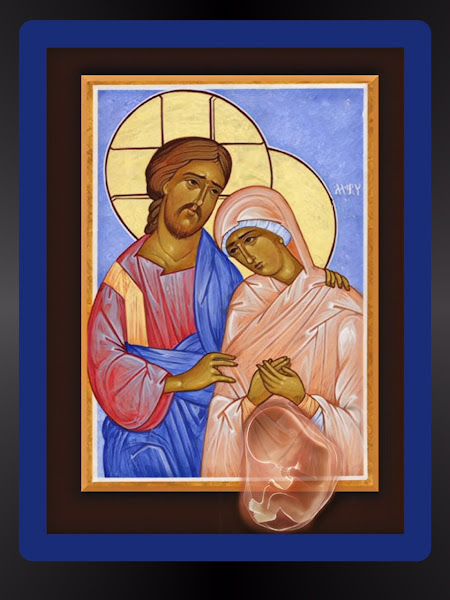
 Analogue 9 There are those who say that Mary conceived by means of the Sacred Spirit. They are confused and know not of what they speak. When has it ever occurred that the female has conceived by means of the feminine? Mary, who was honored among the Jewish and other Apostles, was not impregnated by a feminine power. Any power seeking to do that only defiles itself. So the Master would not have said, “My Father in heaven,” unless he had an earthly father. He would simply have called him, “Abba.” Therefore, the Master said to his students, “Come, indeed, into the Abba’s house, but do not take your possessions into it, and do not remove anything from it.” Intro to Analogue 9 by Lynn Bauman Synopsis This analogue appears to be an aside: An argument that is important but perhaps not part of the central mysteries. It seems to be a theological polemic concerning a debate occurring in the early Christian community of Philip’s time regarding the birth and origins of Yeshua. The argument c...

Analogue 8 Images

Image